My YouTube “recommendations” today involved some “This pairing 4ever” shipping video for Sonic the Hedgehog and someone called Amy Rose. Having grown up as a Nintendo girl, I know very little about Sonic.
The few cartoons that I’ve seen don’t involve this pink hedgehog character. Sonic has mostly been running around on his own with Tails or been helping a group of Freedom Fighters. The Freedom Fighters version tends to have him interested in a squirrel(1) lady named Sally Acorn. Their budding relationship is believable. They both have similar goals and become friends while working towards those goals. It’s perfectly plausible that they could become closer and have a romantic relationship as time goes on.
My curiosity forced me to look up this Amy Rose character. According to Sonic News Network, Amy has been in many of the Sonic games, comics and an anime series unrelated to the Freedom Fighters’ universe. She’s decided that she is Sonic’s girlfriend. She follows him everywhere in order to prove it. Sonic doesn’t share her feelings. In other words, Amy is a crazy stalker chick determined to live the lies of a one-sided relationship.
This brings a serious question to mind. Why are characters like Amy Rose so readily embraced by a fandom? Why would anyone think that a stalker and a victim should be a “one true pairing”?
What really gets me is that the stalker character type is a common theme in TV shows. One character pursues another character with the insistent belief that they are meant to be together The pursuer shows no respect or consideration for the victim’s feelings, privacy or freedom. The victim is constantly harassed or forcibly coerced into accepting the stalker’s love.
One of the most famous examples of “stalker love” is the Looney Tunes character “Pepe Le Pew”. He lustfully pursues Penelope Pussycat with no regard to her attempts to derail him. Penelope has done everything from trying to run away from Pepe to causing him physical harm to flat out telling him that she’s not interested. Simply because *he* wants her, Pepe doesn’t care what Penelope says or does. Somehow, this is supposed to be “funny”.
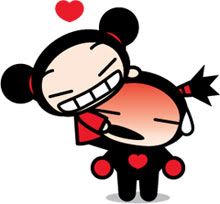
Don’t think that “stalker love” is a men’s only issue either. Reverse the genders and you get a character and cartoon of the same name, “Pucca”. She has no consideration for her “love”, Garu, whatsoever. He may be trying to train, meditate, relax, eat, sleep or work around his home. Pucca willfully interrupts him because *she* wants him to love her. He has clearly shown that he doesn’t like her advances and flees from her. Yet, somehow it’s great comedy to allow Pucca to chase Garu down and force her hugs and kisses all over him.
Another example of this “humor” is the 1989 TV show, Family Matters. From the show’s beginning episode in 1989 to its finale in 1998(2), the nerdy Steve Urkel forces himself upon his neighbor and schoolmate, Laura Winslow’s, home, her life and her heart. Nothing that Laura can say or do will detract Steve’s obsessive belief that she is his one and only true love. Even during the later seasons in which they each find romance separately, Steve still tries to pursue Laura. Apparently this was funny enough to carry nine seasons.
Now Amy Rose joins the stalker character list. I honestly do not understand or find “stalker love” humorous in the least.
Romance should be about two people SHARING feelings for each other. Romance should never be about one character forcing themselves upon another whether that other likes it or not. Why do people continue to consider stalking someone relentlessly as “love”? That is hardly love. It’s harassment and possibly rape. When someone disrespects another character’s feelings, denies them their freedom or to be who they are there’s no “love” there. It’s a case of wanting to be a control freak, a dominator or a self-centered narcissist. Because people who love each other don’t treat each other like glorified personal prizes.
In short, a stalker/victim “one true pairing” just isn’t love. Why is such a relationship embraced by others? I have to wonder what kind of chemical imbalance allows a person to think stalker love is anything but a grotesque farce. I fail to understand why so many people approve of it.
Footnotes:
(1) I have NO clue what Sally is supposed to be. Is she a deer or a chipmunk maybe? Nope, apparently she’s a squirrel according to Sonic News Network http://sonic.wikia.com/wiki/Sally_Acorn
(2) Family Matters entry on the Internet Movie Database http://www.imdb.com/title/tt0096579/
Read along as I sift through the past to show why some oldies are as good today as they were back then. Nostalgia isn't blind. Nostalgia's sight is in hind.
Saturday, March 17, 2012
Friday, January 13, 2012
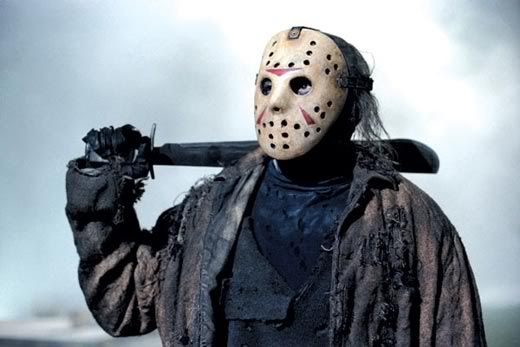
Happy Jason Day!
Once upon a camp forsaken
Many teenage lives were taken
Their crimes were being far too loose
While a child suffered great abuse
The mantle began with a heartsick mom
Then it was seized by crazies to don
Finally, with aid of lightning’s spell
The suffered child arose from Hell
With a goalie’s face
And a machete’s fear
Friday the 13th is the sound
That brings Jason Voorhees above the ground
Many teenage lives were taken
Their crimes were being far too loose
While a child suffered great abuse
The mantle began with a heartsick mom
Then it was seized by crazies to don
Finally, with aid of lightning’s spell
The suffered child arose from Hell
With a goalie’s face
And a machete’s fear
Friday the 13th is the sound
That brings Jason Voorhees above the ground
Friday, December 30, 2011
Koosh of Glory!
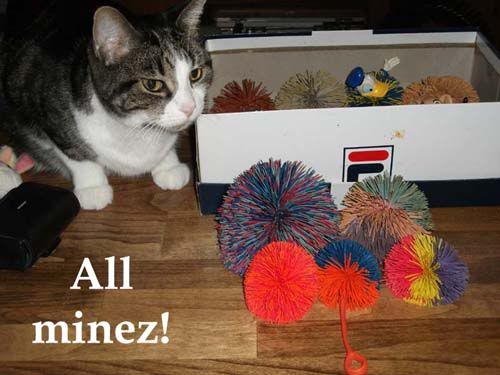
Arising from the dust of the 80s, it is an odd little combo of rubber bands, a pom-pom and a soft ball. I speak of a favorite from my childhood, the Koosh ball. Introduced in 1988, it was one of those semi-trendy fads that enjoyed a few years of popularity then receded into the oddities of the toy department.
During the ancient spandex days of 1986, a father, Scott Stillinger, wanted a safe and soft toy for his children to play with. His efforts resulted in a toy ball made of rubber filaments. The toy earned its name from the "koosh" sound heard when it was moved about. Along with his brother-in-law, Mark Button, Stillinger started OddzOn Products Inc in 1987 to market the koosh ball. Their efforts were well rewarded as the koosh ball made 1988’s ‘hottest Christmas toys’ list.
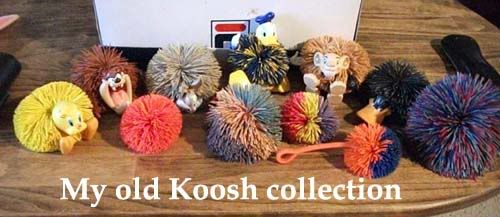
In their maiden incarnation, koosh were simply rubber bandy balls. As often happens with successful items, they were soon expanded into other toyetic merchandise. Koosh yoyos, key chains and even jewelry became commonplace. One of the more memorable renditions of the koosh had to be the "koosh kins". Cartoony faces and arms were added to the balls to create ‘characters’. The concept proved popular enough for mainstream companies like Warner Brothers and Disney to "koosh" their characters. Even today, you can find Phineas, Ferb and Barry among the collectiballs.
Koosh balls have thwarted the toy graveyard because they’ve found practical niches to fill. Adults have embraced them as occupational enhancement accessories in the workplace. A koosh’s soft, squeezable form makes it an ideal stress ball. It has also been rumored to provide a quiet distraction during meetings.
Because of its visual and touch sensory stimulation, the koosh ball has become popular for educational therapy. Koosh balls are often used for hand-eye coordination as well as touch exercises. The Davis Learning Strategies Program includes them in teaching kits for dyslexic children. Some teacher advice columns recommend using koosh balls as a means of keeping students’ attention.
Even today, your friendly neighborhood koosh ball has personal uses. It makes a unique paperweight. It appears to be a cat-swiping magnet (though ill-advised due to possibility of rubber strands coming out and being a choking hazard). It doubles as a pet Tribble for Sci-fi fanatics. For those of us with a creative mind, koosh balls could be quite a nice army of evil spike monsters which terrorize the world around them.
References:
Starr, Linda. “Education World; Behavior Management Tips: Quiet Classrooms and More”.
http://www.educationworld.com/a_curr/behaviortips/behaviortips034.shtml (2005)
Davis Learning Strategies. http://www.dyslexia.com (2011)
Wikipedia. “Koosh Ball”. http://en.wikipedia.org/wiki/Koosh ((2011)
“Office Playground: Koosh Ball”.
http://www.officeplayground.com/Koosh-Ball-P161.aspx Retrieved December 30th, 2011.
Friday, November 18, 2011
Total Culture Shock!
To help my drawing skills, I picked up a couple of books about clothing styles throughout the 20th century. Total culture shock! I’ve learned two lessons from this.
Styles change but run in about 20-30 year cycles. Don’t believe me? 1900-20 meet the ‘sack trousers’ wide leg pants sometimes with cuffs sometimes without; 1930s ‘Wide leg denim’ pants come in; 1960s-70s Say hello to ‘bell bottoms’; 1990s-present you know them as ‘wide leg’ carpenter jeans.
Shoulder pads were seen in the 1920s, 1940s & 1980s. Remember the non-flattering ‘babydoll dress’? Go back a few more years. You’ll know them as ‘smocks’ and ‘sack dresses’ during previous portions of history.
Fabrics and some details may change. But the feature remains the same.
Lessons 2 is that the clothing that we consider ‘old folks clothes’ today was what young people wore back then. High waists were popular as was many other things that we consider ‘old’.
I think this is the real reason why a resurgence in 80s style is happening. We, the 80s kids, are getting older and we want our old stuff back.
Wow, the thought of our wrinkly butts running around in faded out, rolled up stonewashed denims as ‘old folks clothes’ is kinda creepy.
Styles change but run in about 20-30 year cycles. Don’t believe me? 1900-20 meet the ‘sack trousers’ wide leg pants sometimes with cuffs sometimes without; 1930s ‘Wide leg denim’ pants come in; 1960s-70s Say hello to ‘bell bottoms’; 1990s-present you know them as ‘wide leg’ carpenter jeans.
Shoulder pads were seen in the 1920s, 1940s & 1980s. Remember the non-flattering ‘babydoll dress’? Go back a few more years. You’ll know them as ‘smocks’ and ‘sack dresses’ during previous portions of history.
Fabrics and some details may change. But the feature remains the same.
Lessons 2 is that the clothing that we consider ‘old folks clothes’ today was what young people wore back then. High waists were popular as was many other things that we consider ‘old’.
I think this is the real reason why a resurgence in 80s style is happening. We, the 80s kids, are getting older and we want our old stuff back.
Wow, the thought of our wrinkly butts running around in faded out, rolled up stonewashed denims as ‘old folks clothes’ is kinda creepy.
Thursday, November 17, 2011
Video Game Life lessons Part 1
A few years ago, a friend got me addicted to watching video game playthroughs and Let’s Plays of them. (A Let’s Play is a player commenting during gameplay.) I’ve gotten to see quite a few games that I’ll never get to play. I get to see some that thwarted my childhood efforts. Plus, there are quite a few games from consoles that I never knew existed.
One thing that I hear quite often is “How was I supposed to know that?” or “That’s STUPID! How’d they expect people to figure THAT out?”
Gee, I dunno. How about these little life lessons called ‘trial and error’, ‘patience and determination’ and ‘developing problem solving skills’.
Ever since video gaming exploded in the 80s, people have complained about all of the bad things that video games are; too violent; too sedentary; waste of time; non-productive; too difficult; ect; ect; ect & totally BS.
Actually, video games are full of life lessons. Sometimes they’re more useful than the supposed ‘life preparation lessons’ taught in school.
These days, we’re familiar with such lessons as
“Beware the plumber.”
“In medieval times, women regularly fought in wars, wearing armor that afforded them equal protection to suits of plate mail worn by men, despite only covering about 3 inches of skin.”(1)
“Property destruction, theft and mass murder are not only acceptable, they’re encouraged through rewards and required to get to the next level.”
“Everyone is a stupid NPC (non player character) except for you.”
Mainstream as they are, I have a few other ‘real-world applicable’ lessons in mind.
There’s a long 40 year+ history behind video games. Obviously, all of the life lessons can’t be covered in one post. So, let’s just start with the early years.
During the 70s and early 80s, video games didn’t end. Literally, there was no real end to these games. Except for the occasional bug corruptions around level 255, games were just the same 4-9 repeating levels. With each cycle the AI (artificial intelligence) moved faster to create more of a challenge for the player.
What life lessons did those repetitive cycles teach?
Pattern recognition and memorization – Many games had patterns to each of the enemy AIs. With a little patience, those patterns could be memorized. Knowing the pattern makes defeating an enemy easier.
Patterns are everywhere; from numbers to words to human behaviors. Dictionaries use an alphabetical pattern. Knowing the pattern allows you to skip around the book to find what you need more quickly. Even the simple act of counting is a pattern of 0-9 cycles. As you grow up, you memorize the pattern of things like a 9-digit phone number, 16-digit cards and various other things. Even a street address is a pattern.
Identifiable disease patterns allow doctors to develop working treatments. Behavioral patterns help therapists figure out how they can best motivate a recovering patient. You always thought teachers had eyes in the back of their heads? Nope, they just memorize their students’ patterns. After a few years, they just know when to expect things and from whom. Like it or not while student faces change each year the behaviors remain the same. Even leaders stay in control by recognizing patterns and taking advantage of them.
Crowd Navigation – Most of the early games featured masses of enemies against one player. No matter how many times the player cleared the screen, foes always returned with about 60 of their buddies. Still, the player hitched up their pixels and cleared the screen again.
Life is full of crowds. From traffic to stores to school and work hallways, you’ve got to get through the crowd to reach your destination. Granted, you can’t just destroy them or hit them. If Frogger was your teacher, you’ve learned to observe the crowds and dodge your way through.
Repetitive cycles – Get used to it, kid. Each weekday, kids go to school, sit in classes, do assignments and leave. Each year, it’s the same thing only with higher grades of information. (And there’s the whole ‘growing up’ thing. I suppose you could call that a difficulty setting increase.)
After school, you’ll be in the adult world of ‘a job’. 10 to 1 you’ll be going to some office, store, or other location, to do the same thing on a daily basis…for the rest of your life.
Working for Points - In the 70s/80s, games were played for fun and high score bragging rights rather than a good ending. Games were replayed to get a better score and higher bragging rights. It’s really as simple as that.
Welcome to the reason for which you work; a paycheck. If you work hard or smart enough, your paycheck gets bigger. A bigger paycheck means better stuff.
These are a mere few of the ‘life lessons’ from video games. Don’t worry, there’s more – a whole lot more. But that is for another post. Seeya next time!
Footnotes:
1. (2008) 101 things we've learned from videogames The wisdom of our favorite pastime, applied to real life http://www.gamesradar.com/101-things-weve-learned-from-videogames/
One thing that I hear quite often is “How was I supposed to know that?” or “That’s STUPID! How’d they expect people to figure THAT out?”
Gee, I dunno. How about these little life lessons called ‘trial and error’, ‘patience and determination’ and ‘developing problem solving skills’.
Ever since video gaming exploded in the 80s, people have complained about all of the bad things that video games are; too violent; too sedentary; waste of time; non-productive; too difficult; ect; ect; ect & totally BS.
Actually, video games are full of life lessons. Sometimes they’re more useful than the supposed ‘life preparation lessons’ taught in school.
These days, we’re familiar with such lessons as
“Beware the plumber.”
“In medieval times, women regularly fought in wars, wearing armor that afforded them equal protection to suits of plate mail worn by men, despite only covering about 3 inches of skin.”(1)
“Property destruction, theft and mass murder are not only acceptable, they’re encouraged through rewards and required to get to the next level.”
“Everyone is a stupid NPC (non player character) except for you.”
Mainstream as they are, I have a few other ‘real-world applicable’ lessons in mind.
There’s a long 40 year+ history behind video games. Obviously, all of the life lessons can’t be covered in one post. So, let’s just start with the early years.
During the 70s and early 80s, video games didn’t end. Literally, there was no real end to these games. Except for the occasional bug corruptions around level 255, games were just the same 4-9 repeating levels. With each cycle the AI (artificial intelligence) moved faster to create more of a challenge for the player.
What life lessons did those repetitive cycles teach?
Pattern recognition and memorization – Many games had patterns to each of the enemy AIs. With a little patience, those patterns could be memorized. Knowing the pattern makes defeating an enemy easier.
Patterns are everywhere; from numbers to words to human behaviors. Dictionaries use an alphabetical pattern. Knowing the pattern allows you to skip around the book to find what you need more quickly. Even the simple act of counting is a pattern of 0-9 cycles. As you grow up, you memorize the pattern of things like a 9-digit phone number, 16-digit cards and various other things. Even a street address is a pattern.
Identifiable disease patterns allow doctors to develop working treatments. Behavioral patterns help therapists figure out how they can best motivate a recovering patient. You always thought teachers had eyes in the back of their heads? Nope, they just memorize their students’ patterns. After a few years, they just know when to expect things and from whom. Like it or not while student faces change each year the behaviors remain the same. Even leaders stay in control by recognizing patterns and taking advantage of them.
Crowd Navigation – Most of the early games featured masses of enemies against one player. No matter how many times the player cleared the screen, foes always returned with about 60 of their buddies. Still, the player hitched up their pixels and cleared the screen again.
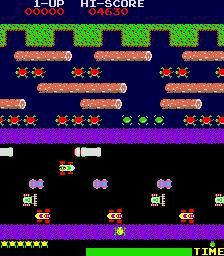
Life is full of crowds. From traffic to stores to school and work hallways, you’ve got to get through the crowd to reach your destination. Granted, you can’t just destroy them or hit them. If Frogger was your teacher, you’ve learned to observe the crowds and dodge your way through.
Repetitive cycles – Get used to it, kid. Each weekday, kids go to school, sit in classes, do assignments and leave. Each year, it’s the same thing only with higher grades of information. (And there’s the whole ‘growing up’ thing. I suppose you could call that a difficulty setting increase.)
After school, you’ll be in the adult world of ‘a job’. 10 to 1 you’ll be going to some office, store, or other location, to do the same thing on a daily basis…for the rest of your life.
Working for Points - In the 70s/80s, games were played for fun and high score bragging rights rather than a good ending. Games were replayed to get a better score and higher bragging rights. It’s really as simple as that.
Welcome to the reason for which you work; a paycheck. If you work hard or smart enough, your paycheck gets bigger. A bigger paycheck means better stuff.
These are a mere few of the ‘life lessons’ from video games. Don’t worry, there’s more – a whole lot more. But that is for another post. Seeya next time!
Footnotes:
1. (2008) 101 things we've learned from videogames The wisdom of our favorite pastime, applied to real life http://www.gamesradar.com/101-things-weve-learned-from-videogames/
Tuesday, November 8, 2011
Dull Cartoons = For Girls?
Just for ‘fun’ – and because I’ve never actually seen it - I looked up a cartoon called ‘Lady LovelyLocks’. It’s supposed to be an essential for girls’ cartoons everywhere. My impression? Dear gawd, that was worse than watching paint dry. (At least paint gives you those nice spirit-lifting noxious fumes.) This show was boring, contrived, overly moralistic and just plainly lacks replay value except for those with ‘the blinding light of nostalgia’.. I can’t believe they expected anyone to watch that drek!
Moving on, I tried to look up some lists of ‘girls cartoons’. All I really found were ‘hot girls’ lists created by boys. One list that attracted my attention was ‘5 80s Girls Toons That Boys Secretly Watched’. I gave it a look. Some of those list members completely confused me.
Care Bears is a girls’ cartoon? I’ve honestly always thought of it as a gender-neutral toon for the younger sets. In fact, it seems that most ‘little fuzzy animal’ toons are placed into the realm of ‘girls toons’. The Wuzzles, Popples, and Pound Puppies are just a few of the shows given the designation of a ‘girls cartoon’. The cast seems diverse enough that it should be a gender-neutral show, at least, in my personal opinion.
Now, one remark on the previously mentioned list did catch my irritation. The list creator mentioned that he watched G1 My Little Pony. As a hasty side note, he added “That’s the original My Little Pony, not Pony Tales! That was definitely for girls!”
So are you telling me that basically any cartoon which is low-key or boring is automatically a ‘girls cartoon’? Anything that doesn’t involve a world-altering consequence, big-issue conflict or smash bash action is obviously a show ONLY designed for girls? Are you saying that girls shows are required to be dull, cutesy drek?
“Oh, that’s dull. Must be a girls’ show!”
Thankfully, we have seen some companies attempt to break this trend with shows like the PowerPuff Girls and Kim Possible. Results have been mixed at best. Quite frankly, Japanese animation has done a far better job of bringing respect to a ‘girls show’ with shows like Slayers and the, parody-enriched, Excel Saga.
It’s sad to think that 91 years after women acquired the right to vote in America, the designation ‘for girls’ still implies a vastly inferior product to the designation of ‘for boys’.
Moving on, I tried to look up some lists of ‘girls cartoons’. All I really found were ‘hot girls’ lists created by boys. One list that attracted my attention was ‘5 80s Girls Toons That Boys Secretly Watched’. I gave it a look. Some of those list members completely confused me.
Care Bears is a girls’ cartoon? I’ve honestly always thought of it as a gender-neutral toon for the younger sets. In fact, it seems that most ‘little fuzzy animal’ toons are placed into the realm of ‘girls toons’. The Wuzzles, Popples, and Pound Puppies are just a few of the shows given the designation of a ‘girls cartoon’. The cast seems diverse enough that it should be a gender-neutral show, at least, in my personal opinion.
Now, one remark on the previously mentioned list did catch my irritation. The list creator mentioned that he watched G1 My Little Pony. As a hasty side note, he added “That’s the original My Little Pony, not Pony Tales! That was definitely for girls!”
So are you telling me that basically any cartoon which is low-key or boring is automatically a ‘girls cartoon’? Anything that doesn’t involve a world-altering consequence, big-issue conflict or smash bash action is obviously a show ONLY designed for girls? Are you saying that girls shows are required to be dull, cutesy drek?
“Oh, that’s dull. Must be a girls’ show!”
Thankfully, we have seen some companies attempt to break this trend with shows like the PowerPuff Girls and Kim Possible. Results have been mixed at best. Quite frankly, Japanese animation has done a far better job of bringing respect to a ‘girls show’ with shows like Slayers and the, parody-enriched, Excel Saga.
It’s sad to think that 91 years after women acquired the right to vote in America, the designation ‘for girls’ still implies a vastly inferior product to the designation of ‘for boys’.
Sunday, November 6, 2011
The 'Annoyed with Christmas Already' Song
I think it's time for a repost of an old song.
(Tune of 'Here comes Santa Claus')
Here comes Selfish Claus, Here comes Selfish Claus,
Ruining all holidays
He gets his kicks by steamrolling over anything in his way.
Thanksgiving is all but gone
Halloween is shunned
Say bye-bye to your holidays dear
Cuz Selfish Claus hogs the year
Here comes Selfish Claus, Here comes Selfish Claus,
Ruining all holidays
He gets his kicks by steamrolling over anything in his way.
Columbus and Veteran's Day - were they known well anyway?
An' when his foot holds in July, Independence Day will fry
So hang your head cuz holidays are dead
Cuz Selfish Claus hogs the year
(Tune of 'Here comes Santa Claus')
Here comes Selfish Claus, Here comes Selfish Claus,
Ruining all holidays
He gets his kicks by steamrolling over anything in his way.
Thanksgiving is all but gone
Halloween is shunned
Say bye-bye to your holidays dear
Cuz Selfish Claus hogs the year
Here comes Selfish Claus, Here comes Selfish Claus,
Ruining all holidays
He gets his kicks by steamrolling over anything in his way.
Columbus and Veteran's Day - were they known well anyway?
An' when his foot holds in July, Independence Day will fry
So hang your head cuz holidays are dead
Cuz Selfish Claus hogs the year
Subscribe to:
Posts (Atom)