Thursday, September 12, 2013

85 Halloween Songs

Most so-called “Halloween hits” are really just songs about angst, depression, abuse, suicide and murder. These might be a Goth’s idea of paradise. However, these are also just regular things shown on the news daily. It’s hardly Halloween.

Apparently, Halloween’s true meaning has fallen by the wayside in a society that wants to be all “extreme” and “edgy”. Halloween is not about death and dying. It’s about honoring or celebrating the, already, dead in order to keep them from returning to the living world along with their otherworldly friends. The holiday also demonstrates the consequences of their return.

In the true spirit of Halloween, this list is full of what I consider to be representative of the holiday season. Every song suggestion is reviewed for lyrics as well as sound. All songs are about the paranormal or Halloween items such as costumes, candy, pumpkins and chilling, non-ordinary scares. Cuss-happy lyrics need not apply. While there are plenty of great sad songs out there, this list is a party playlist. Lesley Gore may want to cry at her party but we sure don’t!

Enjoy this list of 85 upbeat, mostly clean (A little gore, euphemisms and minor swears) tunes for your Hallowday season presented by the Old Pumpkin Keeper.

The Old Pumpkin Keeper’s List of Tunes for the Hallowday Season

The Adams Family Theme - Vic Mizzy
Attack of the Killer Tomatoes - (1980 Movie Theme)
Boris The Spider - The Who
Bones - Little Big Town
Brains – Voltaire
Bride of Frankenstein - Elvira, Mistress of the Dark
Calling all the Monsters - China Anne McClain
The Candy Man - Sammy Davis Jr. (what's Halloween without candy?)
Casper The Friendly Ghost - Little Richard
Can't Sleep, The Clowns will eat me - Alice Cooper
The Cockroach That Ate Cincinnati - Rose & the Arrangement
The Creature From The Black Lagoon - Dave Edmunds
Curse of the Werewolf - Timeless Miracle
Dark Lady – Cher
Day of the Dead – Voltaire
Devil Went Down to Georgia - Charlie Daniels Band
Do the Zombie - Chubby Checker
Don’t Look Now - The Misfits (Jem and the Holograms ep ‘Trick or Techrat’)
Dream Warriors - Dokken (Nightmare on Elm St 3)
Drink With the Living Dead – Ghoultown
The Eggplant That Ate Chicago - Dr. West's Medicine Show & Junk Band
Everyday is Halloween - Ministry
Flying Saucer Attack - Rezillos
Ghostbusters - Ray Parker Jr.
Ghost in a Bikini - The Judys
Ghost Riders In the Sky - The Outlaws
Give Me a Smile (Pumpkin Song) - Andrew Gold
The Greatest Show Unearthed - Creature Feature
Grim-Grinning Ghosts - (Haunted Mansion Theme) Thurl Ravenscroft & the Mello-Men
Halloween Song - Al Dana
Haunted House - Gene Simmons
Hearse Song - Unknown (Halloween just isn't without the instrumental version of this song!)
He’s Back (The Man Behind the Mask) - Alice Cooper (Friday the 13th part VI)
Hephelumps and Woozles - (Winnie the Pooh)
Highway Cafe of the Damned - Austin Lounge Lizards
House Party at Arkham Asylum - The Great Luke Ski
I Died So I Could Haunt You - Stars I Put a Spell On You - Screamin' Jay Hawkins.
I Put a Spell On You - Bette Midler (Disney movie Hocus Pocus)
It’s Terror Time Again - Skycycle
Legend Of Wooley Swamp - Charlie Daniels Band
Little Demon - Screamin' Jay Hawkins
Little Ghost - The White Stripes
Little Shop of Horrors - (1986 Movie title song)
Maneater - Hall & Oates
The Martian Hop - The Ran-Dells
McCavity - Cats
The Meanest Meanest Pumpkin In The Land - Alan Kirk
The Monster Mash - Bobby "Boris" Pickett
Monster’s Holiday - Buck Owens
Monster Squad - (Movie end credit song)
Mr. Ghost Goes to Town - The 5 Jones Boys
Nature Trail to Hell - Weird Al Yankovic
Nightmare on My Street - DJ Jazzy Jeff and the Fresh Prince
Pet Sematary - The Ramones
Phantom 309 - Red Sovine
Purple People Eater - Sheb Wooley
Scary Ned - Arrogant Worms
Shalloween - Andy Partridge
Shiver My Timbers - Muppets (Muppet Treasure Island)
Sittin' Up With The Dead - Ray Stevens
Skeleton Song - Kate Nash
Skullivan Walks - They Might Be Giants
Spooky - Classic 5
Star Trekkin - The Firm (Dr. Demento 20th Anniversary Collection)
Superstition - Stevie Wonder
Surfin’ Dead - The Cramps
Swamp Witch - Jim Stafford
That Old Black Magic - Margaret Whiting
There’s a Zombie on Your Lawn – Laura Shigihara
This Is Halloween - Danny Elfman (Nightmare Before Christmas)
Thriller - Michael Jackson
Time Warp - Damian (Rocky Horror Picture Show)
Trick or Treat - Elvira, Mistress of the Dark
Trick or Treat (for Halloween) - The Mickey Mouse Club (1952 Donald Duck cartoon theme)
Walking Alone - Rusty (Haunted History episode Haunted Tombstone)
Weird Science - Oingo Boingo
Werewolves Of London - Warren Zevon
Wicked Old Witch - John Fogarty
Witch Queen Of New Orleans - Redbone
Witchy Woman - Eagles
Your Brains - Jonathan Coulton
Zombies Ate Her Brain - The Creepshow
Zombie Jamboree - Rock-a-Pella
Zombie Love Song - Ray Johnson
Zombie Stomp - Elvira, Mistress of the Dark

And of course.... There's a Monster Mountain of Instrumental music

Anything by "The Midnight Syndicate"

Movie/TV Theme Examples (Impossible to list them all) Beetlejuice Theme
Friday the 13th Theme
Exorcist Theme
Gremlins Theme
Halloween Theme
Nightmare - Artie Shaw
Invader Zim Theme
Jaws Theme
Nightmare on Elm St Theme
Night On Bald Mountain (Disney's Fantaisia)
Tales From the Crypt Theme
Toccata and Fugue in D Minor (Phantom of the Opera theme)
Twilight Zone Theme

Video Game Examples American McGee’s Alice
Fatal Frame series
Luigi’s Mansion
Silent Hill series
…Just to name a few

Monday, January 14, 2013

A Season of Sparkles

Look, Ma! It’s January! As our year begins anew, we embrace the month of diets, taxes, holiday regrets, winter blues and the pre Valentine’s Day onslaught. It’s the perfect season for…the vampire.

I’m sure your first thought after that double take must be something along the lines of “What are you smoking?’ The answer is nothing. It’s too expensive and very bad for your health.

So please sit back as I explain. Thanks to a certain series of books, the vampire has become more romanticized than ever before. Many people just adore the lustful, free spirited, sexy, usually wealthy, and angsty undead beings known as “the children of the night”.

I’m thoroughly amused by the fact that the Twilight book series has been out since 2005 and people are still whining about sparkles. Get over yourselves! I’m not crazy about the new fad myself. But it’s not worth going gray over. We’re merely seeing a new angle on an old idea. Take a look back through history and you’ll see how the vampire has had enough accessory changes to make Barbie jealous.

During the python-like constrictive Victorian era, authority figures hated everything. Thus there was no way that a magazine could openly write about sex. Naturally, this simply invoked writers’ creativity in finding loopholes. So they transformed the agonizing experience of being ravaged by a vampire into a sensuous experience. What better metaphor could there be for making out than some creature nibbling on a person’s neck?

Credit for many of the modern vampire’s traits goes to James Malcolm Rymer’s 1845 creation “Varney the Vampire”. The vampire’s standard self-loathing nature, amazing strength and hypnotic powers were among Varney’s “privileges” of being a blood sucker. Oddly enough, Varney had no problem with sunlight. (No, he didn’t sparkle.) He could function as a perfectly normal human being without aversion to religious items or garlic and some minor disagreement with food.

It was only through the works of other authors, like Joseph Sheridan La Fanu and Bram Stoker, that the vampire became cut off from “normal society”. While many of the vampire’s afflictions with religion, reflections and refreshments have come and gone, only sunlight has survived as the vampire’s main obstacle.

During the war-torn 1940s, the vampire filled a needed void by becoming a comedian for the populace to laugh at. By figuratively tearing out the vampire’s fangs, people felt that they could face anything. Even after the misguided efforts of 1950s paranoia tried to lay these creatures to rest, the vampire’s comedic role in series like the Munsters has helped it thrive and followed it right into today.

Dracula, and friends, took on a new role during the 1960s – hero. Not only was Drac fearfully funny, he was a creature to be admired and praised for the good that he does. In both a brief Dell comic book as well as an animated series, descendants of Dracula decided to fight for justice. That’s right; vampires weren’t just good guys helping the weak and needy. They were super heroic guys, saving the day and the damsels too.

Let’s not forget the 1980s when children stepped into the spotlight in all mediums. Even the vampire went to school. Oddly enough, the teenage vampire wasn’t usually angsty. The teenage vampire was cool. It was the popular kid that everyone wanted to be around. You’ve heard of the Fonz? The vampire was the Fangz.

From high school hunk to teacher and babysitter, the vampire’s been there. Befriending the “outcast” children of the world has become all part of the vampire’s persona. Apparently after meeting author Anne Rice, vampires got some feeling back in their….er emotional stability.

Cartoons like “Mina and the Count” and “Dear Dracula” give us Count Babysitter befriending the unpopular kids and showing them how to thrive in society. (Ironic, isn’t it?) We have the Count of Sesame Street teaching our youth the wonders of numbers. Count Chocula reminds our tots of the importance of breakfast.

For those who loved the scandal, Barnabas Collins kept the Dark Shadows series entertaining for 4 years. Let’s not forget the brat prince, Lestat. His free wheeling mischief has delighted audiences since 1976.

In the Shadow Hearts Covenant video game series, the vampire returns to its “almost normal human” roots. Only their ability to transform into bats and their, practically immortal, life spans separates them from average human. Joachim Valentine takes great pride in his wrestling prowess and seeks to become a world wrestling champion. He’s strong as an ox and has no problem with sunlight. He just happens to be a homosexual vampire. That’s all.

Next up we have Angel. Now here’s your little angst-pot. Beginning as a series villain on the 1996-2003 “Buffy the Vampire Slayer” series, Angelus received a soul and a spin-off series of his own. Now Captain Angst-a-Lot –er, Angel - feels bad for all of the harm that he’s caused. So he seeks to help everyone with their paranormal dilemmas. You know, protect people from supernatural baddies, finding a means of peaceful communications between the various demonic entities and defending himself from everything that wants to kick his tail for some reason. Angel does all of this while struggling to avoid being purely happy for even one instant because that’s his curse. Be a sad sack or lose your soul. Doesn’t that sound fun? Apparently it was good for 5 seasons.

So from beast to babe to babysitter and even baby, the vampire has experienced quite a colorful life over the years. Being a girl’s sparkly teen heartthrob bobble is merely the latest aspect to the vampire’s life. Who wouldn’t want a little sparkle on Valentine’s Day?

Now of course, throughout the entirety of the vampire’s life, it has still struck fear into the hearts of the masses. Every so often, someone manages to revitalize that fear by reaching back into the depths of history and recapturing the truly evil predatory beast that the vampire used to be.

What will the vampire be next? Perhaps they’ll get into politics or the legal system. How’d you like a real blood-sucking lawyer on your side? Maybe Dracula will be president someday.

  • Footnotes:
  • The Internet Movie Database www.imdb.com
  • Anne Rice’s website http://annerice.com/
  • Varney the Vampire’s Wiki page http://en.wikipedia.org/wiki/Varney_the_Vampire
  • Shadow Hearts Covenant website http://www.shadowheartscovenant.com/
  • Barnabas Collin’s Wiki page http://en.wikipedia.org/wiki/Barnabas_Collins
  • Shadow Hearts Covenant Walkthrough http://lparchive.org/Shadow-Hearts-Covenant/

Thursday, December 13, 2012

Let's Change Names Because They Don't Know

Recently, the cancer support organization known as Gilda’s Club announced that they are changing their name to Cancer Support Community. The reason given is that most of their younger patients don’t know who Gilda Radner was. Instead of continuing to seize the opportunity to educate others about the life of one who suffered as they do but didn’t have their benefits, they’ve decided to change their name so as not to confuse the young patients.

You’re kidding, right?

We often see the issuing of an “Amber Alert” for a child. This has become the term for “A child has gone missing. Please be on the lookout for that child”. How many people know why the term “Amber Alert” is used? How many people know that the “Amber Alert” program is the living memory for Amber Hagerman?.

Over 16 years have passed since one family’s heart-shattering loss was rallied into a nationwide program that coordinates information outlets to locate abducted children.

Somehow, I doubt they’ll stop calling it an “Amber Alert” just because few people know, or remember, the story behind it.

If we’re out to accommodate the youth, we may as well start changing all street names, building names, park names and countless foundation names every two or three years. Just think how much confusion that would relieve all those precious little youths of having to learn about.

This got me to thinking about ordinary words we still use despite very few people knowing anything about them anymore.

Car engine power is described in “horsepower”. Ask the average driver what that means and you’ll probably get some vague answer about the speed of the vehicle. The fact that one horsepower is roughly equivalent to 746 watts of electricity is not exactly information hanging on most people’s refrigerator door. These days, engines can have anywhere upwards of 140 horsepower or more. Numbers like that don’t really make a horse sound all that strong. They could use the term “mouse power” for all most people care. As technology advances, the horses (and wattage) keep piling up.

Speaking of technology, our lives are increasingly surrounded by digital everything. The days of the round faced clocks are fading away. Does today’s youth still know what the terms “clockwise” or “counter clockwise” refer to? To them, a clock is a numeric display rather than a round disc of numbers where time is expressed by the position of two different sized sticks.

With the advancement of computers, many kids learn how to type before they learn how to write with pencils or pens. Yet we still see the image of a feather dipped into a bottle used as a representation of a writer. How many people still know that this feather is called a quill pen? In an age of instant things, how many people would understand the concept of having to continually dip the quill into the bottle of ink in order to write?

Our world is full of antiquated terms and names still in common usage with little regard to why they are used. Changing something because it might “confuse the youth” has got to be one of the sorriest excuses that I’ve ever heard.

As a side note, the “Cancer Support Community” gave each local chapter the option of changing their name or keeping the name of Gilda’s Club. I’m pleased to say that my local chapter chose to keep Gilda Radner’s memory alive through the use of her name.

Footnotes:

Special thanks to Pepe K. for word ideas.

Information gathered from the following sites:

Gilda Radner’s Internet Movie Database page
http://www.imdb.com/name/nm0705717/?ref_=fn_al_nm_1

Amber Alert America’s Missing: Broadcast Emergency Response http://www.amberalert.gov/

The Story and History of the Amber Alert http://www.amberalertcreator.com/

“Horsepower” entry on Wikipedia http://en.wikipedia.org/wiki/Horsepower

Quill pen image from “Sweet ClipArt” http://sweetclipart.com/

Monday, October 29, 2012

Concepts of Ages

I’m beginning to write a story which involves a grandmother telling her granddaughter a story. A real conceptual change occurs to me that I hadn’t realized before.
Grandma and Grandpa are no longer the people who lived through the Great Depression or the World War II decades. Grandma and Grandpa are now the ones who protested for equal rights among the races and genders, went to Woodstock and fought in Vietnam. Drive-ins and disco are now what grandparents know.
What’s even stranger is that in only a few years (if not already) Grandma and Grandpa will be the ones who played arcade games and listened to cassettes. Individually, these concepts of age shifts have happened to many people. It’s only now that the children of the late 60s, 70s and 80s are in their 30s and 40s. Mainstream society is accepting the shift in age concepts. Even the people who aren’t parents can’t deny the generational shifts.
That’s a lot to think about. To us “grandparents” listened to the radio and worked to support the war effort. To our kids, “grandparents” watched the original airing of Howdy Doody, Star Trek and Batman as well as living through the Red Scare, Nuclear threats and the space program.
On the one hand, the shifting thoughts of the generations are disturbing because it means that we’re progressing through the ages of society. In another sense, it’s rather fascinating to see the age thought shift in action. It’s a gradual change. But I feel like I’m just now really beginning to understand the age shift as a mainstream thing.
Creepers, I’m getting old. Oh well. HEY YOU KIDS, GET OFF MY LAWN BEFORE I BLAST SOME R.E.M. DOWN YOUR EARLOBES!

Monday, October 22, 2012

Care Bears Teach Broken Aesops

According to “Tv Tropes”, a ‘broken Aesop’ is “a story where the moral presented just doesn't match the moral that the story actually contained”.

I bring this up because I encountered it over the weekend.

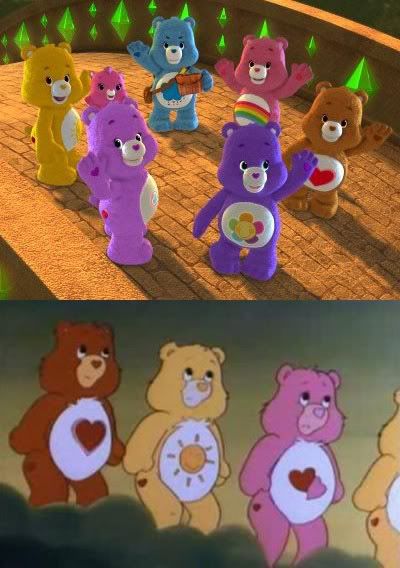
The Care Bears have received, yet another, incarnation in 2012’s CGI animated “Welcome to Care-A-Lot”. Admittedly, the drawing style is reminiscent of the old 80s Nelvana Care Bears series brought into a more 3-D form. Looks-wise, it is rather appealing.

Sadly, that’s about the only good thing about it. The bears have been reduced to single layered character stereotypes. Instead of just helping kids overcome issues, the bears usually have to learn moral lessons themselves. Um, why should a child listen to your caring preaches when you have to learn the lesson yourself?

Some folks may wonder why I’d watch some show aimed at the preschool sect. The simple reason is that I was a child of the 80s. I like to look in at the reboots of old shows. Plus it’s amusing to check in on what they try to shove at little kids every so often.

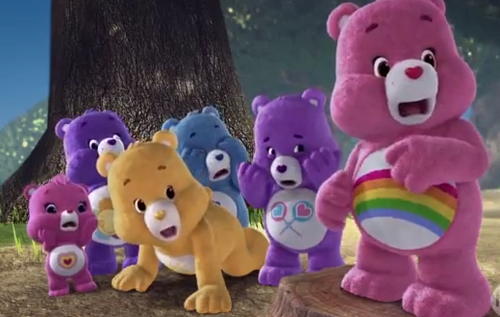
The episode that I caught this weekend was called “Welcome to Grump-A-Lot”. Grumpy Bear prepared to watch the ‘Honey Bowl’. He laid out a great snack spread for himself and made himself nice and comfortable. Just as he started to watch the game, Funshine Bear came along and helped himself to Grumpy’s snacks. Then he invited himself to watch the game with Grumpy all the while still hogging the snacks. Next, Harmony Bear showed up asking Grumpy to build something for her. When she found out he was trying to watch a game, she invited herself to watch as well...and wouldn’t shut up. Then we see Share Bear, Cheer Bear and, the obligatory obnoxiously precocious child character, Wonderheart Bear each show up to further prevent Grumpy from watching the game.

Naturally, Grumpy finally became extremely upset with everyone. His tummy symbol released a nasty storm cloud which changed everyone to negative versions of themselves. Poor Grumpy is forced to fix the situation because the annoying forest creatures wouldn’t leave him alone since the other bears weren’t around to coddle them. For some reason, the production crew felt that Grumpy Bear was the one in the wrong and needed to learn a lesson about controlling his frustration.

I’m sure their intentions were in the right place. Unfortunately, their presentation was very badly done. This episode showed that it was ok for others to walk all over a person without regard to their personal space or feelings and that person should accept that.

Now I know that the moral values and attitudes have changed quite a bit since the 80s. But is that really the kind of lesson we want kids to learn? I guess the Care Bears think so.

Footnotes:
Thanks to the following sites for info and images.
Tv Tropes tvtropes.org
Internet Movie DataBase http://www.imdb.com
Tumblr tumblr.com

Wednesday, October 10, 2012

Resurrect: Reboot: Repeat

Besides being a 1994 CGI animated series, ‘reboot’ has become Hollywood’s buzzword for the 21st century. With remakes like Frankenweenie and Dark Shadows as well as series reboots like Steel Magnolias, GI Joe and Scooby Doo, it seem that Hollywood has well and truly given up the ghost on new concepts.

Of course, remaking previously told stories in some ‘new’ way is nothing new for Hollywood. Thomas Edison’s The Great Train Robbery (1903; directed by Edwin S. Porter) has been remade at least four times over the past century. Even Thomas Edison chose to ‘remake’ the movie with a child cast as a 1905 parody.

Let’s not forget the more than 20 incarnations of Bram Stoker’s Dracula. Each version tried to ‘reimagine’ the story in its own unique style.

Have you ever been stuck for an idea? Go meet Dracula. From Abbot and Costello (1948) to Batman (2005) and an original cast in the Monster Squad (1987), tangling with Dracula has become a quick buck mainstay of many studios. (He who mentions Billy the Kidd gets a boot to the head.)

What some people may not realize is that story retreads aren’t just a Hollywood thing. The comic book industry ‘reimagines’ its characters so often that they’ve resorted to designating parallel Earth numbers to each version. All over the internet, there are servers overflowing with ‘alternate version’ fanfiction tellings of series, movies, plays and books.

The idea of rebooting a story goes back even further than Hollywood. Classic books like Little Women (1868 & 1869), The Adventures of Tom Sawyer (1876) and the beyond infamous A Christmas Carol (1843) all have been ‘reimagined’ by various playwrights.

It could be argued that story reboots have been going on since humanity began telling stories. The legends of mythology went through many remakes as they advanced through geography and time.

What truly amuses me about the current crop of reboots is that they stem from the 1980s. 80s programming has been denounced as being too merchandise driven. Yet here we are watching My Little Pony, GI Joe, Teenage Mutant Ninja Turtles and many other “25 minute toy commercials” being rebooted and remade as some supposedly new thing.

Has the century produced some new things? Yes, we’ve seen the rise of brilliantly told series like Invader Zim (2001), Avatar the Last Airbender (2005) and the Walking Dead (2010). Even the horror genre got a nice little revival in Ring (2002 – originally Japan’s Ringu 1998), Saw (2004) and Paranormal Activity (2007).

Some people may be tempted to blame the Writers’ Strike of 2007-2008 for the influx of reboots. Considering that the entire decade has seen reboots of series like TMNT (2003), Scooby Doo (Take your pick), Care Bears (2004) and others, this argument is void. It’s even less valid when you consider that the Writers’ Strike of 1988 didn’t stop the innovation of the 1990s with shows like Chip’n’Dale’s Rescue Rangers, Animaniacs, the PowerPuff Girls and the Simpsons.

So come on, Hollywood! Get the dead out and find some new concepts again!

Footnotes:

Thanks to the searching powers of
Amazon.com
Internet Movie Database
Wikipedia

Wednesday, April 18, 2012

Legend of Korra Episode 2 - Brutal Bending Lessons!

With the television debut having been this weekend, I feel it’s safe to do an episode summary/review. If you haven’t seen the episodes or don’t want to hear about them, this post is not for you.

Please remember, you’ve been spoiler warned!

Episode Two, “A Leaf in the Wind”, opens with Korra reading the news about the latest Pro Bender Match. She has been a fan since she was little and dearly wants to see a real match. Tenzin hardly shares her opinion of the Pro Bender Matches. He intends for Korra to stay on the island to train. The army of White Lotus guards is there to make sure that she does just that.

The next morning sees Tenzin and Korra discussing the fact that Korra can’t air bend despite her many attempts. It’s also here that we get another wonderful “human moment”. Korra is not wearing the shawl for the air nomad costume correctly. Tenzin merely helps her adjust the shawl correctly. All the while, the duo is discussing the fact that air bending has been Korra’s elusive element. There’s no verbal acknowledgement of the shawl faux-pas at all.

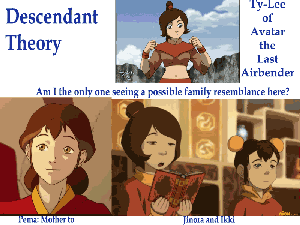
It’s also here that we begin to see the different personalities of Tenzin and Pema’s children. Jinora appears to have her father’s self-control and lower key attitude. Ikki is still hyper happy. Meelo is… basically a human Lemur.

Finally we get to see what air bending training really looks like. Apparently, it’s a bit evil. To get the feeling of flowing like a leaf on the wind, a beginner must weave through a gauntlet of spinning wooden panels. Despite the children’s encouragements, Korra’s attempts are less than impressive. To be honest, I can’t imagine Tenzin being cruel enough to put his little kids through that. Jinora does give a good demonstration of how it’s done. But that thing would beat the crap out of Meelo!

No one can say that Korra is a quitter though. That night, she tries harder than ever to force air bending to work and ends up Fire bending in frustration. She becomes distracted when she hears some of the White Lotus sentries listening to a Pro Bender Match on the radio. Tenzin discovers her and sends her to bed.

For someone who’s supposed to be an Air bender, Tenzin is uptight. Korra calls him on that fact during meditation. “You’re telling me to embrace freedom. Yet you won’t let me listen to the radio and forget about leaving this island.” As one can guess, Korra grows increasingly frustrated with her inability to grasp Air bending.

Once again, nightfall brings Korra out with an escape. This time, she heads to the arena to see a Pro Bending Match for herself. Discovered by an elderly gym owner, Korra is about to be handed to security when she is rescued by a Pro Bender named Bolin. He introduces Korra to his twin brother, Mako. Korra gets to see her first match as well as her first Pro Bender fighting style lesson.

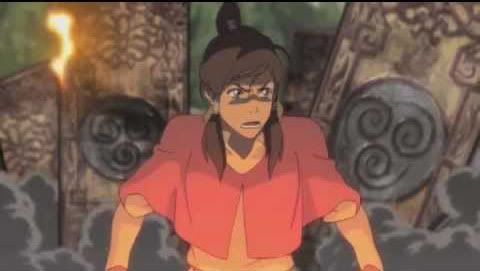
Back at the island, things still aren’t working out well. Her frustration finally peaks. Korra gives the panel gauntlet a taste of Fire bending power. Tenzin is understandably upset considering that this device has somehow managed to survive for 2,000 years. Without concern, Korra blames him for her frustration and stomps off. Again, we see an endearing “human moment” as both Jinora, Ikki and the audience realize that Tenzin’s feelings have been hurt. Even Meelo’s comical copying of Korra’s words and actions can’t detract from the emotion of the moment.

While Tenzin and his family sit down to a meal, Korra sneaks off to the Pro Bender Match again. This time she arrives to a very sullen Bolin and Mako. Their Water bender has ditched them. A team cannot participate without all three elements being represented. Korra ends up filling in and the match gets underway. In her exuberance, Korra ends up Earth bending which leads to the match referees’ realization that she is the Avatar.

When Aang’s revelation as the Avatar was announced, his friends didn’t want to play with him. They claimed that being the Avatar gave him an advantage and would be unfair to the other players. Things have really changed over the past 200 years. The referees decide to allow Avatar Korra to play with the stipulation that she only Water bend.

Naturally, Korra’s first match gets off to a shaky start. To make matters worse, Tenzin arrives to confront her. After an altercation, Korra returns to the match. Tenzin is about to leave but decides to stay and watch. With the opposing team really giving Korra all the bending they’ve got, something clicks. Perhaps a panel gauntlet just wasn’t the proper motivation that Korra needed to unlock her potential. But a barrage of elemental bending attacks sure did the trick! Korra weaves and dodges long enough for the rivals to tire. Then she, Mako and Bolin take the fight to them.

Later, Korra comes to Tenzin to apologize for lashing out at him. He concedes that he was to blame as well. Although she still can’t Air bend, Korra is ready to get back to training – both with Tenzin and with Mako and Bolin, her new Pro Bending Match partners.

With the first two episodes alone, Korra has proven that it will be another great series for Nickelodeon. Beautiful backgrounds, wonderful life in the character animation and an engaging storyline promise to keep fans deeply immersed in the Avatar world for years to come.

To be honest, I’ve only got two questions of the series so far.

1. Can Korra metal bend?

2. Has Katara passed on the forbidden “blood bending” power to anyone?

Thanks again to Tumblr.com for the pics.

Legend of Korra Episode 1

In 2005, the team of Michael Dante DiMartino and Bryan Konietzko brought us an amazing three season story of “Avatar the Last Airbender”. This April, they return with a new installment for the Avatar series, “Avatar the Legend of Korra”. With the television debut having been this weekend, I feel it’s safe to do an episode summary/review. If you haven’t seen the episodes or don’t want to hear about them, this post is not for you.

Please remember, you’ve been spoiler warned!


Our story begins with a blizzard laden evening in the Southern Water Tribe home at the South Pole. The Order of the White Lotus has taken over for the temple sages in searching for, and guiding, the new Avatar. Three members of the White Lotus arrive at a humble abode to be greeted by a proud couple. Why are they proud? Well, when the lady calls for Korra (pronounced core-ra) to come into the room, the wall is blasted away and we see Toph jr! Well, actually, we meet their young daughter, Korra.

With a snarl of “I’m the Avatar. Deal with it!” she quickly shows that she has indeed discovered Earth bending, Fire bending and Water bending. One fire sprayed scene change later we meet teenage Korra taking her Fire bending test. As a White Lotus member notes Korra has the power but lacks restraint. The discussion after the test reveals that Korra has the power and elemental mastery. But she lacks the spiritual side that an Avatar needs. It’s elderly Master Katara who persuades the White Lotus members that Korra should begin Air bending training with the only Air bender, Katara’s son, Tenzin (pronounced ten-z-in). Perhaps he can help her achieve the spiritual side of the Avatar as well as teaching her to Air bend.

Korra and Aang are about as different as any two people could be. Aang dreaded being the Avatar because he had been all over the world and had seen the pressures that the Avatar title brought. In order to “keep her safe”, the Order of the White Lotus has built a compound at the South Pole. Korra has grown up only knowing that she has to master the four elements and use them to help people. Her sheltered life leaves her with no real understanding of what responsibilities being the Avatar will bring.

Apparently, Korra’s only grudgingly allowed out of the compound to let her polar bear dog, Naga, exercise.

Tenzin and his family soon arrive on a sky bison. (Guess Appa wasn’t the last sky bison after all.) We meet the stoic Tenzin, his exasperated, and pregnant, wife, Pema (pronounced p-emma) and their three lunatics – I mean kids. I’m not kidding. The youngest child and only son, Meelo (pronounced me-low), is literally chewing on Tenzin’s head. The daughters, eldest child, Jinora (pronounced gin-or-a) and, middle child, Ikki (pronounced eek-ee) are beyond excited to see Grandma Katara.

Unfortunately, Tenzin can only stay one night as he is needed in Republic City. The city that Aang and Firelord Zuko founded in order to promote peace and harmony among the elemental nations is not so harmonious. So, Tenzin can’t move to the compound. Likewise, the city is just too dangerous for the new Avatar Korra to move there. (In other words the Order of the White Lotus has gone from a secret club of old farts to a cagey militia of Avatar overly-protectors.)

The stage is pretty much set for Korra to do (what else?) run away and follow Tenzin to Republic City anyway. Before she leaves, Korra stops to say good-bye to her parents. This is an excellent “human moment” to show Korra’s parents as still being an important part of Korra’s life as well as supportive of her choices. If only Toph’s parents could have been that way.

Without spoiling too much more, Korra gets her first taste of Republic City’s ups and downs. In other words the fire hits the victrola once Korra gets off the boat. One of the most interesting aspects of Korra’s personality is that she’s highly confident in her skills rather than being arrogant about her title. She doesn’t walk around the city trying to use the Avatar title to get her way. Nor does she outwardly announce that she’s the Avatar. It’s up to those around her to figure out who she is based on her actions.

Another highlight of the episode is Korra’s encounter with the no nonsense daughter of Toph Bai Fong, Lin. As the Republic City Police Chief, Lin is not impressed nor swayed by any of Korra’s words. When Tenzin arrives to retrieve Korra, Lin is just as nonplussed with him. In another nice “human moment”, Lin thumbs her nose at Korra as the girl leaves with Tenzin. Korra returns the favor to Lin.

Previous series fans will see quite a bit of continuity nods to the original Last Airbender series. The old war blimps have evolved into patrol blimps. Katara is still the understanding soul that she was as a teenager. The elemental nations still dress according to their elemental colors. Even some small things come back like seeing more of a beast mentioned in Book Two of the original Avatar series – a platypus bear!

Let’s not forget all the new items to entice us. We see how much larger the Southern tribe homes have become since Katara’s days. There’s a ton of new technology like cars, victrolas and radios going around. Plus we get to see what a cityscape is like in the Avatar universe.

Just in the first episode, this already looks to be an interesting series. Episode 2 is for the next post.

Thanks to Tumblr.com for the pics.

Sunday, March 25, 2012

Avatar the Legend of Korra Obligatory First Impressions

Thanks to the efforts of Korra-Nation, we are honored to receive the first 2 episodes of the new addition to the Avatar the Last Airbender series; “The Legend of Korra”. It is with illustrious gratitude that I….. Aw, heck with it – Nickelodeon allowed an early premiere to be launched on the web and I got to see it! Woohoo!

After seeing these first two episodes, I must admit that I’m highly looking forward to this series. It’s very rare for a production to recapture the best elements of a first series within a sequel. Somehow, the creators have introduced an almost entirely new cast and still managed to give it the same quality, lifelike characters and excellent story that the original Last Airbender series had.

I’m stunned by the continued beauty of the background artists. They obviously spent a great deal of time and care to bring the world of Avatar to life during the first series. The tradition continues with “The Legend of Korra”. From the blizzard ridden South Pole right into the streets of Republic City, viewers’ eyes will gorge on the immense visuals provided. There’s barely one frame of the background images that doesn’t deserve its own place in an art gallery.

I’m enchanted by the life that the animators have brought to the characters. The facial expressions are very clear without going over the top. Just as would happen with people, a character’s eyes show the real emotion while that character’s lips say something different. Little actions heighten the humanity of the characters even more. When Korra first begins air bending training, she is not wearing the shawl for the air nomad costume correctly. Tenzin merely helps her adjust the shawl correctly. All the while, the duo is discussing the fact that air bending has been Korra’s elusive element. There’s no verbal acknowledgement of the shawl faux-pas at all. The show is chock full of little *human* things like this.

I’m impressed by the depth of the characters just in these two episodes. Korra is a go-getter type of character. She relishes her avatar skills and isn’t afraid of them. While she’s highly confident in her skills, Korra isn’t arrogant about her title. She is perfectly content to let her actions do her talking and let those around her figure out who she is. Above all else, Korra is excited about life and her avatar training. Elemental bending, martial arts and especially the “Pro Bender Matches” have her full attention.


Don’t think that they only went all out for Korra. Tenzin does his best to remain stoic at all times. However, he can show emotions as well. Tenzin’s eyebrows serve as subtle insight to his character. Surprise, shock, anger, frustration, contentment and sadness are all very nicely conveyed through his eyebrows. At one point, Korra insults him personally. The music of the moment and the lighting effects enhance the emotional atmosphere. It’s in Tenzin’s face – especially his eyebrows- where you see the hurt showing. Both the audience and Tenzin’s daughters can see how much the comment has wounded him. Speaking of which, Tenzin’s kids are already developing personalities just in 2 episodes. In the first episode, they’re pretty much hyper insanity in a flesh suit. The exasperation on their mother, Pema’s, face is priceless. During episode 2, Jinora steps forward as a responsible, bookish type starting to take after her father. Ikki is happy and hyper yet is beginning to understand that sometimes, it’s ok to be serious. Meelo…. is still pretty much asylum material. (Given his young age, you can’t blame him too much.)

Even Korra’s new friends, Mako and Bolin, are showing character depth. It’s obvious that Bolin will bear much of the comic relief of the series while Make will try to remain a straightforward person. But the episode is quick to show that Bolin is both an adept fighter as well as an encouraging teacher. Mako appears to already be showing signs of warming up to Korra.

For those who were worried about how the story could be continued and remain engaging, you will be relieved and excited to know that the creative team of Michael Dante DiMartino and Bryan Konietzko have easily matched their previous high-quality standards set by their original work, “Avatar the Last Airbender”.

Espisode reviews coming next post!

Thanks to tumblr.com for the image.

Saturday, March 17, 2012

That Crazy Thing Called Stalker Love

My YouTube “recommendations” today involved some “This pairing 4ever” shipping video for Sonic the Hedgehog and someone called Amy Rose. Having grown up as a Nintendo girl, I know very little about Sonic.

The few cartoons that I’ve seen don’t involve this pink hedgehog character. Sonic has mostly been running around on his own with Tails or been helping a group of Freedom Fighters. The Freedom Fighters version tends to have him interested in a squirrel(1) lady named Sally Acorn. Their budding relationship is believable. They both have similar goals and become friends while working towards those goals. It’s perfectly plausible that they could become closer and have a romantic relationship as time goes on.

My curiosity forced me to look up this Amy Rose character. According to Sonic News Network, Amy has been in many of the Sonic games, comics and an anime series unrelated to the Freedom Fighters’ universe. She’s decided that she is Sonic’s girlfriend. She follows him everywhere in order to prove it. Sonic doesn’t share her feelings. In other words, Amy is a crazy stalker chick determined to live the lies of a one-sided relationship.

This brings a serious question to mind. Why are characters like Amy Rose so readily embraced by a fandom? Why would anyone think that a stalker and a victim should be a “one true pairing”?

What really gets me is that the stalker character type is a common theme in TV shows. One character pursues another character with the insistent belief that they are meant to be together The pursuer shows no respect or consideration for the victim’s feelings, privacy or freedom. The victim is constantly harassed or forcibly coerced into accepting the stalker’s love.

One of the most famous examples of “stalker love” is the Looney Tunes character “Pepe Le Pew”. He lustfully pursues Penelope Pussycat with no regard to her attempts to derail him. Penelope has done everything from trying to run away from Pepe to causing him physical harm to flat out telling him that she’s not interested. Simply because *he* wants her, Pepe doesn’t care what Penelope says or does. Somehow, this is supposed to be “funny”.

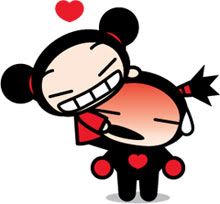
Don’t think that “stalker love” is a men’s only issue either. Reverse the genders and you get a character and cartoon of the same name, “Pucca”. She has no consideration for her “love”, Garu, whatsoever. He may be trying to train, meditate, relax, eat, sleep or work around his home. Pucca willfully interrupts him because *she* wants him to love her. He has clearly shown that he doesn’t like her advances and flees from her. Yet, somehow it’s great comedy to allow Pucca to chase Garu down and force her hugs and kisses all over him.

Another example of this “humor” is the 1989 TV show, Family Matters. From the show’s beginning episode in 1989 to its finale in 1998(2), the nerdy Steve Urkel forces himself upon his neighbor and schoolmate, Laura Winslow’s, home, her life and her heart. Nothing that Laura can say or do will detract Steve’s obsessive belief that she is his one and only true love. Even during the later seasons in which they each find romance separately, Steve still tries to pursue Laura. Apparently this was funny enough to carry nine seasons.

Now Amy Rose joins the stalker character list. I honestly do not understand or find “stalker love” humorous in the least.

Romance should be about two people SHARING feelings for each other. Romance should never be about one character forcing themselves upon another whether that other likes it or not. Why do people continue to consider stalking someone relentlessly as “love”? That is hardly love. It’s harassment and possibly rape. When someone disrespects another character’s feelings, denies them their freedom or to be who they are there’s no “love” there. It’s a case of wanting to be a control freak, a dominator or a self-centered narcissist. Because people who love each other don’t treat each other like glorified personal prizes.

In short, a stalker/victim “one true pairing” just isn’t love. Why is such a relationship embraced by others? I have to wonder what kind of chemical imbalance allows a person to think stalker love is anything but a grotesque farce. I fail to understand why so many people approve of it.


Footnotes:

(1) I have NO clue what Sally is supposed to be. Is she a deer or a chipmunk maybe? Nope, apparently she’s a squirrel according to Sonic News Network http://sonic.wikia.com/wiki/Sally_Acorn

(2) Family Matters entry on the Internet Movie Database http://www.imdb.com/title/tt0096579/

Friday, January 13, 2012

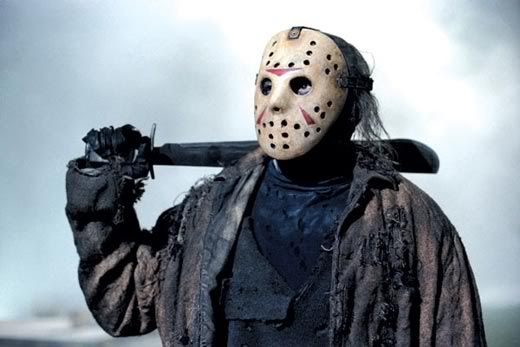
Happy Jason Day!

Once upon a camp forsaken
Many teenage lives were taken
Their crimes were being far too loose
While a child suffered great abuse

The mantle began with a heartsick mom
Then it was seized by crazies to don
Finally, with aid of lightning’s spell
The suffered child arose from Hell

With a goalie’s face
And a machete’s fear
Friday the 13th is the sound
That brings Jason Voorhees above the ground

Friday, December 30, 2011

Koosh of Glory!


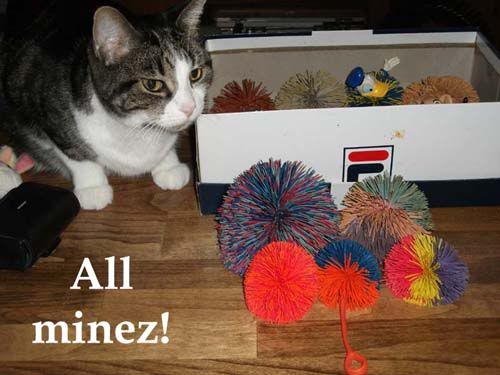
Arising from the dust of the 80s, it is an odd little combo of rubber bands, a pom-pom and a soft ball. I speak of a favorite from my childhood, the Koosh ball. Introduced in 1988, it was one of those semi-trendy fads that enjoyed a few years of popularity then receded into the oddities of the toy department.

During the ancient spandex days of 1986, a father, Scott Stillinger, wanted a safe and soft toy for his children to play with. His efforts resulted in a toy ball made of rubber filaments. The toy earned its name from the "koosh" sound heard when it was moved about. Along with his brother-in-law, Mark Button, Stillinger started OddzOn Products Inc in 1987 to market the koosh ball. Their efforts were well rewarded as the koosh ball made 1988’s ‘hottest Christmas toys’ list.

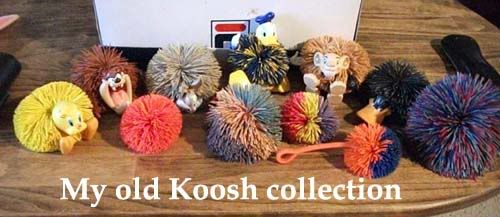
In their maiden incarnation, koosh were simply rubber bandy balls. As often happens with successful items, they were soon expanded into other toyetic merchandise. Koosh yoyos, key chains and even jewelry became commonplace. One of the more memorable renditions of the koosh had to be the "koosh kins". Cartoony faces and arms were added to the balls to create ‘characters’. The concept proved popular enough for mainstream companies like Warner Brothers and Disney to "koosh" their characters. Even today, you can find Phineas, Ferb and Barry among the collectiballs.


Koosh balls have thwarted the toy graveyard because they’ve found practical niches to fill. Adults have embraced them as occupational enhancement accessories in the workplace. A koosh’s soft, squeezable form makes it an ideal stress ball. It has also been rumored to provide a quiet distraction during meetings.

Because of its visual and touch sensory stimulation, the koosh ball has become popular for educational therapy. Koosh balls are often used for hand-eye coordination as well as touch exercises. The Davis Learning Strategies Program includes them in teaching kits for dyslexic children. Some teacher advice columns recommend using koosh balls as a means of keeping students’ attention.

Even today, your friendly neighborhood koosh ball has personal uses. It makes a unique paperweight. It appears to be a cat-swiping magnet (though ill-advised due to possibility of rubber strands coming out and being a choking hazard). It doubles as a pet Tribble for Sci-fi fanatics. For those of us with a creative mind, koosh balls could be quite a nice army of evil spike monsters which terrorize the world around them.


References:
Starr, Linda. “Education World; Behavior Management Tips: Quiet Classrooms and More”.
http://www.educationworld.com/a_curr/behaviortips/behaviortips034.shtml (2005)

Davis Learning Strategies. http://www.dyslexia.com (2011)

Wikipedia. “Koosh Ball”. http://en.wikipedia.org/wiki/Koosh ((2011)

“Office Playground: Koosh Ball”.
http://www.officeplayground.com/Koosh-Ball-P161.aspx Retrieved December 30th, 2011.

Friday, November 18, 2011

Total Culture Shock!

To help my drawing skills, I picked up a couple of books about clothing styles throughout the 20th century. Total culture shock! I’ve learned two lessons from this.

Styles change but run in about 20-30 year cycles. Don’t believe me? 1900-20 meet the ‘sack trousers’ wide leg pants sometimes with cuffs sometimes without; 1930s ‘Wide leg denim’ pants come in; 1960s-70s Say hello to ‘bell bottoms’; 1990s-present you know them as ‘wide leg’ carpenter jeans.

Shoulder pads were seen in the 1920s, 1940s & 1980s. Remember the non-flattering ‘babydoll dress’? Go back a few more years. You’ll know them as ‘smocks’ and ‘sack dresses’ during previous portions of history.

Fabrics and some details may change. But the feature remains the same.

Lessons 2 is that the clothing that we consider ‘old folks clothes’ today was what young people wore back then. High waists were popular as was many other things that we consider ‘old’.

I think this is the real reason why a resurgence in 80s style is happening. We, the 80s kids, are getting older and we want our old stuff back.

Wow, the thought of our wrinkly butts running around in faded out, rolled up stonewashed denims as ‘old folks clothes’ is kinda creepy.

Thursday, November 17, 2011

Video Game Life lessons Part 1

A few years ago, a friend got me addicted to watching video game playthroughs and Let’s Plays of them. (A Let’s Play is a player commenting during gameplay.) I’ve gotten to see quite a few games that I’ll never get to play. I get to see some that thwarted my childhood efforts. Plus, there are quite a few games from consoles that I never knew existed.


One thing that I hear quite often is “How was I supposed to know that?” or “That’s STUPID! How’d they expect people to figure THAT out?”

Gee, I dunno. How about these little life lessons called ‘trial and error’, ‘patience and determination’ and ‘developing problem solving skills’.

Ever since video gaming exploded in the 80s, people have complained about all of the bad things that video games are; too violent; too sedentary; waste of time; non-productive; too difficult; ect; ect; ect & totally BS.

Actually, video games are full of life lessons. Sometimes they’re more useful than the supposed ‘life preparation lessons’ taught in school.

These days, we’re familiar with such lessons as

“Beware the plumber.”
“In medieval times, women regularly fought in wars, wearing armor that afforded them equal protection to suits of plate mail worn by men, despite only covering about 3 inches of skin.”(1)
“Property destruction, theft and mass murder are not only acceptable, they’re encouraged through rewards and required to get to the next level.”
“Everyone is a stupid NPC (non player character) except for you.”

Mainstream as they are, I have a few other ‘real-world applicable’ lessons in mind.

There’s a long 40 year+ history behind video games. Obviously, all of the life lessons can’t be covered in one post. So, let’s just start with the early years.

During the 70s and early 80s, video games didn’t end. Literally, there was no real end to these games. Except for the occasional bug corruptions around level 255, games were just the same 4-9 repeating levels. With each cycle the AI (artificial intelligence) moved faster to create more of a challenge for the player.

What life lessons did those repetitive cycles teach?

Pattern recognition and memorization – Many games had patterns to each of the enemy AIs. With a little patience, those patterns could be memorized. Knowing the pattern makes defeating an enemy easier.
Patterns are everywhere; from numbers to words to human behaviors. Dictionaries use an alphabetical pattern. Knowing the pattern allows you to skip around the book to find what you need more quickly. Even the simple act of counting is a pattern of 0-9 cycles. As you grow up, you memorize the pattern of things like a 9-digit phone number, 16-digit cards and various other things. Even a street address is a pattern.
Identifiable disease patterns allow doctors to develop working treatments. Behavioral patterns help therapists figure out how they can best motivate a recovering patient. You always thought teachers had eyes in the back of their heads? Nope, they just memorize their students’ patterns. After a few years, they just know when to expect things and from whom. Like it or not while student faces change each year the behaviors remain the same. Even leaders stay in control by recognizing patterns and taking advantage of them.


Crowd Navigation – Most of the early games featured masses of enemies against one player. No matter how many times the player cleared the screen, foes always returned with about 60 of their buddies. Still, the player hitched up their pixels and cleared the screen again.
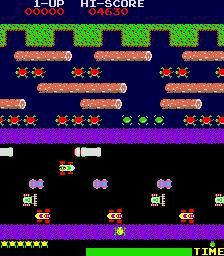
Life is full of crowds. From traffic to stores to school and work hallways, you’ve got to get through the crowd to reach your destination. Granted, you can’t just destroy them or hit them. If Frogger was your teacher, you’ve learned to observe the crowds and dodge your way through.

Repetitive cycles – Get used to it, kid. Each weekday, kids go to school, sit in classes, do assignments and leave. Each year, it’s the same thing only with higher grades of information. (And there’s the whole ‘growing up’ thing. I suppose you could call that a difficulty setting increase.)
After school, you’ll be in the adult world of ‘a job’. 10 to 1 you’ll be going to some office, store, or other location, to do the same thing on a daily basis…for the rest of your life.

Working for Points - In the 70s/80s, games were played for fun and high score bragging rights rather than a good ending. Games were replayed to get a better score and higher bragging rights. It’s really as simple as that.
Welcome to the reason for which you work; a paycheck. If you work hard or smart enough, your paycheck gets bigger. A bigger paycheck means better stuff.

These are a mere few of the ‘life lessons’ from video games. Don’t worry, there’s more – a whole lot more. But that is for another post. Seeya next time!

Footnotes:
1. (2008) 101 things we've learned from videogames The wisdom of our favorite pastime, applied to real life http://www.gamesradar.com/101-things-weve-learned-from-videogames/

Tuesday, November 8, 2011

Dull Cartoons = For Girls?

Just for ‘fun’ – and because I’ve never actually seen it - I looked up a cartoon called ‘Lady LovelyLocks’. It’s supposed to be an essential for girls’ cartoons everywhere. My impression? Dear gawd, that was worse than watching paint dry. (At least paint gives you those nice spirit-lifting noxious fumes.) This show was boring, contrived, overly moralistic and just plainly lacks replay value except for those with ‘the blinding light of nostalgia’.. I can’t believe they expected anyone to watch that drek!

Moving on, I tried to look up some lists of ‘girls cartoons’. All I really found were ‘hot girls’ lists created by boys. One list that attracted my attention was ‘5 80s Girls Toons That Boys Secretly Watched’. I gave it a look. Some of those list members completely confused me.

Care Bears is a girls’ cartoon? I’ve honestly always thought of it as a gender-neutral toon for the younger sets. In fact, it seems that most ‘little fuzzy animal’ toons are placed into the realm of ‘girls toons’. The Wuzzles, Popples, and Pound Puppies are just a few of the shows given the designation of a ‘girls cartoon’. The cast seems diverse enough that it should be a gender-neutral show, at least, in my personal opinion.

Now, one remark on the previously mentioned list did catch my irritation. The list creator mentioned that he watched G1 My Little Pony. As a hasty side note, he added “That’s the original My Little Pony, not Pony Tales! That was definitely for girls!”

So are you telling me that basically any cartoon which is low-key or boring is automatically a ‘girls cartoon’? Anything that doesn’t involve a world-altering consequence, big-issue conflict or smash bash action is obviously a show ONLY designed for girls? Are you saying that girls shows are required to be dull, cutesy drek?

“Oh, that’s dull. Must be a girls’ show!”

Thankfully, we have seen some companies attempt to break this trend with shows like the PowerPuff Girls and Kim Possible. Results have been mixed at best. Quite frankly, Japanese animation has done a far better job of bringing respect to a ‘girls show’ with shows like Slayers and the, parody-enriched, Excel Saga.

It’s sad to think that 91 years after women acquired the right to vote in America, the designation ‘for girls’ still implies a vastly inferior product to the designation of ‘for boys’.

Sunday, November 6, 2011

The 'Annoyed with Christmas Already' Song

I think it's time for a repost of an old song.

(Tune of 'Here comes Santa Claus')

Here comes Selfish Claus, Here comes Selfish Claus,
Ruining all holidays
He gets his kicks by steamrolling over anything in his way.

Thanksgiving is all but gone
Halloween is shunned

Say bye-bye to your holidays dear
Cuz Selfish Claus hogs the year

Here comes Selfish Claus, Here comes Selfish Claus,
Ruining all holidays
He gets his kicks by steamrolling over anything in his way.

Columbus and Veteran's Day - were they known well anyway?
An' when his foot holds in July, Independence Day will fry

So hang your head cuz holidays are dead
Cuz Selfish Claus hogs the year

Monday, October 31, 2011

Spooks and spirits of all kinds
Now’s the time to rise and slime!
Our frightest day dawns at last.
Haunting hours flee too fast.
Happy Halloween!

Wednesday, October 19, 2011

Talking about Teela


In the 80s, I was a fan of the series He-Man and the Masters of the Universe.  Even now, I still find that the show has interesting characters and decent personality development for them. 

Sadly, there’s just never been much in the way of good female characters for girls.  I never cared much for watching some dippy show about airheads looking for BFFs, boyfriends and fashion tips.  I much preferred the real thrill of watching shows about characters going out on adventures, kicking butts, dodging death traps, defeating some foe and saving some magoffin.  So it was only natural for me to be drawn to shows ‘designed for boys’.  Usually, these shows included a few token female characters.  Some were just obvious eye-candy for the young testosterones.  Others were great characters.

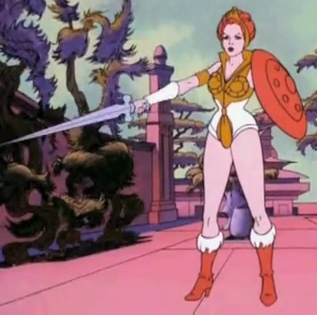
This brings me to the character Teela of He-Man fame.

As a young girl, I admired Teela.  She’s a rare character type.  She’s a capable and agile fighter as seen in episodes like ‘Trouble in Arcadia’.  Episodes such as ‘Like Father Like Daughter’ show Teela’s intelligence.  ‘The Witch and the Warrior’ is an example of Teela’s strategic thinking and cleverness.  Despite her displays of a quick tempter throughout the series, ‘Into the Abyss’ is just one example of Teela’s kind and caring side.  In short, she’s a well-rounded, admirable lady role model.

In one of the rarest things for a good female character ever, Teela is actually reasonably dressed!  Far too often, production crews seem to think that a strong female character must dress like a prostitute.  Teela’s outfit is actually sensible and concealing.  Quite frankly, she’s far less of an exhibitionist than She-Ra.  That’s a constant issue that I’ve had with shows.  Some of them go through the pains to give us a decent female character only to have her dress like the local street-side whore.  Wonder Woman, Storm, Starfire, Xena and Gabrielle are all very good characters.  Yet they dress like lust puppy bait.  It’s very refreshing to see a female, like Teela, that can be a strong competent character without exposing herself like a cheap slab of beef for the oglers.

I’ve always found it extremely unfair that Teela was never allowed to be in on the Eternia secrets.  There was always the excuse of ‘Oh, it’s just too dangerous!’ where she was concerned.  That was the lamest, most ignorant and most selfish excuse that Filmation or Hasbro could have EVER come up with.

Man-at-Arms trained Teela as a soldier.  She’s learned how to fight and how to think her way through most situations.  Teela’s more than proven herself adept at taking on danger.  She doesn’t shy away from it either.  She’s a royal palace captain of the guard for crying out loud!  When Teela sets her mind to something, she isn’t afraid to take risks to achieve her goals.  Yet, she’s smart enough to prepare for those risks.

Teela’s Quest is a good example of Teela’s skills in action.  Man-at-Arms was unable to tell Teela who her mother is because he’d been sworn to secrecy.  He’s very honest about that too.

“That is a secret I’ve promised never to reveal.  Someday, you will learn that secret, Teela.  But not from me.”

This left Teela very depressed.  She decided to find out who her mother is on her own.  That quest would take her to a very dangerous place.  However she didn’t just go unprepared.  After landing her Wind Raider (air-car) in the Crystal Sea, Teela had to continue on foot.  She took a staff with her for protection.  She was also smart enough to have other weapons to deal with the creatures there.  She found the Oracle of the Crystal Sea on her own.  It was telling her about her mother until Mer-Man interfered.  At this point, standard ‘main character saves the day’ rules apply.  He-Man rescued Teela and helped her finish her quest.

Sadly, her determination and skills weren’t enough to prove herself worthy.  After all the trouble that Teela went through to find out who her mother is, the Sorceress showed up and took the knowledge away from her.  Teela proves herself once again by defending Castle Grayskull in ‘Teela’s Triumph’.  Again, she’s denied the knowledge of her mother or He-Man’s secret.  The reason?  “It’s still too dangerous for Teela to know anything yet.” 


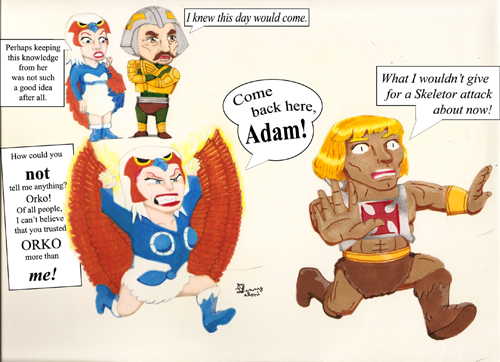
Teela has spent her life being trained as a soldier.  Soldiers are trained to face dangers and take risks.  He-Man didn’t hesitate to lend Teela his sword in ‘Teela’s Quest’.  That sword, I might add, is the source of his powers.  Yet he doesn’t feel that she’s worthy of his secrets?  Keeping Teela out of the loop was completely wrong and stupid.

It’s sad to think that even Man-at-Arms, Teela’s own adoptive father, didn’t trust her enough to be included in Adam’s secret.  Sometimes it seems like Man-at-Arms hates the team’s magician, Orko.  Yet, he trusts Orko more than Teela.

Don’t get me wrong.  For a character that’s basically supposed to be ‘comic relief’, Orko is generally a very useful character.  He helps the group quite a bit and actually comes through in a pinch.  His worth as a character is never contrived to make him seem useful.  He actually does forward the plot of an episode many times leading to a problem’s resolution. 

Still, Orko does tend to have a big mouth.  Every time someone says, “And don’t tell anyone.”  The first thing Orko does is run off to tell everyone. (Except for Adam’s secret)

Considering that they did a female version of He-Man for us girls, they knew that they had a girl fanbase for the show.  They even went through all the trouble of developing endearing, competent female characters that girls could admire and identify with.  To just give such a slap in the face to a character like Teela was one of the biggest mistakes that they ever made.


Saturday, October 1, 2011

New Dvd picked up 'Ghost Stories Seasons 1 & 2'

If you have seen a History Channel series called “Haunted History”, “Ghost Stories” is a very similar paranormal documentary program with a bit less focus on the back-story and a bit more focus on the ghost story itself.  If you haven’t seen “Haunted History”, then I’ll explain.

As the narrator says in the first episode on the disc, ‘Boise Theater’, “I have a tale to tell you.”  This is essentially what the series is.  Jay Thomas plays the eerie storyteller relating accounts of ghostly happenings within a location.  As he narrates, the viewer’s eyes are treated to photo and video images for that location.  Plenty of low-budget sound effects and various ‘apparition experience’ interviews round out the basic idea of “Ghost Stories”.

The series isn’t out to prove or disprove any of the possible hauntings that it presents.  Like a campfire storyteller, it uses what it has in order to entertain viewers and draw them into the story.  So don’t expect any high octane scares or Speilbergian special effects.

If your ‘paranormal experience’ requires a bunch of people walking around with cameras and jumping at every little sound, then you won’t care for this series.  If you enjoy hearing/watching straightforward stories about supposed hauntings with few theatrics, then this series is well worth the money.

Since I prefer the second option, I totally enjoyed this series.

The only downside to the series has to do with the discs, themselves.  The discs don’t have a ‘play all’ function.  The disc returns to the main menu after each episode plays.  The menu doesn’t move to the next episode in the series either.  This makes it too easy to forget which episode was last watched after stepping away from it for awhile.  This may be a bit nit-picky.  However, I find it a bit annoying when a show does not just automatically advance to the next episode.   Even with this slight issue, I still find the set worth it.

Wednesday, September 28, 2011

Not bad for a 'toy commercial'

People like to harp on shows like ‘He-Man and the Masters of the Universe’ as just being ’25 minute toy commercials’.  I’ll admit, I watched He-Man as a kid and enjoyed it quite a bit.  But as time passes (like say over 20 years) there’s no way for a show like that to stay fresh in your brain.  So, natch you forget it.  Not even the Blinding Light of Nostalgia can keep your memory properly archived with the show.

Well, a channel called ‘qubo’ (formerly Discovery Kids) has been running He-Man, She-Ra, Bravestarr and Ghostbusters at night.  So, I finally had an opportunity to see the show again.

After an episode last night, I can say without a doubt that He-Man was far more then any  toy commercial could hope to be.  What the censors restricted them from doing ACTION wise, the production company made up for in writing.

The episode ‘She-Demon of Phantos’ is a perfect example of good writing.

To summarize, Queen Elmora, an ally of Eternia, became Skeletor’s mind puppet.  So, He-Man and friends had to go help her.  Man-at-Arms ordered Teela to stay behind and guard the palace.  She decides that she wants to go anyway and follows the group.  Once there, the group gets into trouble.  Teela saves them.  Man-at-Arms is, understandably, angry with Teela for disobeying him.  He-Man allows her to stay and quickly gets the focus back on the mission.  Throughout the episode, Teela proves herself as a valuable team member.  Eventually, the group reaches Elmora only to have their efforts divided between fighting Skeletor and Elmora and trying to free Elmora from Skeletor’s mind control.  Eventually, He-Man wins and sends Skeletor packing (again.)

With the issue resolved, the group returns to Eternia where Teela is punished.  (She’s made to peel a huge pile of potatoes.)  She doesn’t feel that she should be punished since she proved herself as a valuable team member.  But Man-at-Arms is stern about the fact that she disobeyed a direct order.

What was the moral of the story?  That’s up to you.  He-Man didn’t feel any need to try and hammer a point into your head like SOME shows do today.  For some, the lesson could be that respecting authority is more important than anything.  For others, the lesson could be that Man-at-Arms is a jerk.  Still others could see the lesson as ‘if you’re going to be disobedient make sure you’re useful’.  Some folks could just see it as mindless entertainment and not feel any lessons were given at all.

I’ve got a lot more to say about Teela.  But I think I’ll save that for another post.

Not bad for a ‘toy commercial’ eh?